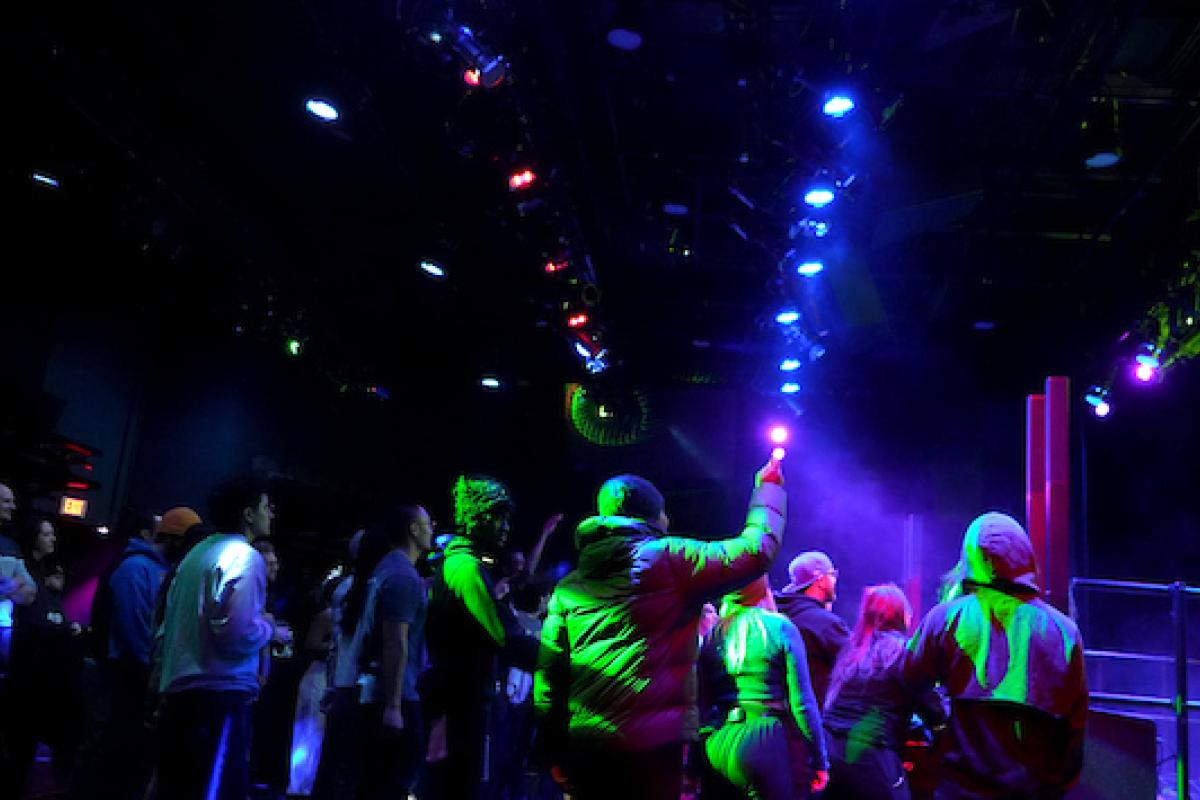
Live music has always brought people together. But in times of stress, uncertainty, or even the quiet fatigue of daily life, it offers something more: the possibility of connection, reflection, and, sometimes, healing.
Each season, the Wisconsin Union Theater (WUT) invites you into spaces where music becomes more than performance; it becomes a shared experience.
Whether it’s the hush before the first note, a lyric that speaks your story out loud, or a rhythm that unites a room of strangers, live performing arts offers something no playlist can: the power of presence and community.
Music as Medicine
Increasingly, research supports what many of us have long believed: live music can be a form of healing. Studies show that attending live performing arts, especially music, can reduce stress, increase feelings of hope, and foster a deeper sense of connection.
At Carnegie Hall in New York City, where WUT Director Elizabeth Snodgrass once helped lead family and community programming, this connection between music and well-being is explored in powerful, data-driven ways. In concerts designed for healthcare workers and individuals facing hardship, participants reported reduced stress, elevated mood, and slowed heart rate and breathing. Through its Lullaby Project, which pairs new parents with artists to co-create personal lullabies, Carnegie has documented measurable increases in caregiver confidence, emotional well-being, and parent-child bonding.
Globally celebrated soprano and a past WUT season artist Renée Fleming has long explored the intersection of music and neuroscience. Through her "Music and the Mind" initiative, she has partnered with researchers to examine how music affects brain function, supports mental health, including reducing anxiety, and aids in healing. She has found that singing and even imagining singing activate extensive areas of the brain; one example is in Parkinson’s patients’ therapy, where therapists use imagined rhythms to help patients walk. Her work has also shown that group singing boosts oxytocin, which is often called the “love hormone,” and reduces cortisol, which is sometimes called the “stress hormone.”
The message is clear: live music doesn’t just entertain; it strengthens us.
Stories That Heal
At WUT, we believe in this potential. Our events don’t shy away from life’s complexities; they honor them. This season’s artists explore themes like mental health, grief, resilience, and joy with vulnerability and depth.
The Black Box Sessions, in particular, offers raw, intimate performances that invite you to show up as you are and maybe leave feeling just a little more whole or with a new perspective.
Noga Erez, who will perform on Oct. 15, weaves stories of her hardships into themes she believes will resonate with many listeners. For instance, her song “A+” off her 2024 album “The Vandalist” has an overall theme of freedom while incorporating her own story of how she got herself out of painful situations.
WUT performances are invitations to experience your story or the stories of others through art as well as to connect and be fully present with the artists, one another, and yourself.
Belonging, Together
Healing often begins with a feeling of belonging. And belonging can be built in performance spaces like ours, in moments of applause and in the shared emotional journeys on which the arts take us,
That is a true gift of the performing arts: performing arts draws us together and reminds us, gently but powerfully, that we’re not alone.
So we invite you, no matter what you're carrying and no matter what you're seeking, to be part of it.
The 2025-26 WUT season is a celebration of resilience, community, and the power of the arts to move us toward well-being, understanding and exploration. Explore the full lineup here.